
State Bank of India (SBI), the largest lender in the country, has launched a share sale to institutional investors to raise upto Rs 25,000 crore, the biggest qualified institutional placement (QIP) so far by an Indian firm, and has set a floor price of Rs 811.05, which is at a 2.5 per cent discount on Wednesday's closing price.

Vishal Kampani has big shoes to fill as his father is close to the Ambanis, the Wadias and the Ruias, says Dev Chatterjee.

RBI's likely focus will shift back towards the resolution of non-performing loans in the banking system for reviving credit demand


Indian stock markets have experienced some ups and downs in the first half of 2025. However, both the Nifty 50 and Sensex saw steady gains, supported by a healthy economy and better corporate earnings. In this article, we will look at the detailed performance of these key indices and explore the sectors that drove the market rally.

Brent crude oil prices may rise to $110 a barrel in 2023, up nearly 33 per cent from the current levels, said analysts at Morgan Stanley, in a recent note. This is, however, lower than the peak level of nearly $127 touched earlier in 2022 as geopolitical concerns took centre stage amidrising demand. "Looking ahead, Brent oil price growth will decelerate even more in the coming quarters. "This comes even as our global oil strategist expects a rise in oil prices back to $110 a barrel by the second half of 2023.

Coalition governments aren't necessarily a negative for the economy, though they can result in negative outcomes in the stock market if not already priced in before elections.

Approaches Morgan Stanley, GIC and Blackstone

There was no smooth surge in middle class prosperity for foreign businesses to tap into because of the Indian economy was mismanaged, argues Debashis Basu.

YouTuber Prajakta Koli announced her engagement to boyfriend Vrishank Khanal.

Some major contracts coming up for renewal include TCS' deals with Star Alliance, a consortium of airlines based in Germany, and Nielsen; Infosys' deals with GE Appliances and Daimler; HCLTech's with UK-based life insurer Chesnara; Wipro's with German electric utility company E.ON and Petrobras of Brazil; and Tech Mahindra's with Circle Health.

From the outcome of the general elections and then Union Budget to tepid corporate earnings in the September 2024 quarter (Q2-FY25), sticky inflation and Reserve Bank of India's stance on interest rates, extreme weather conditions, Indian stock markets have braved it all in calendar year 2024.

The report said inflation is expected to remain below 5 per cent over the two years.

Higher valuation creation in companies beyond the top 100 has given the domestic markets a shot at a $4 trillion market capitalisation (mcap) - a club exclusive to three countries currently. On November 23, the mcap of all BSE-listed stocks finished at a new record of Rs 328.33 trillion ($3.94 trillion), despite the benchmark indices ending with losses. The mcap was propelled by gains in the broader market, including small and midcap stocks - a trend dominant this year.

After pumping in close to $20 billion in the preceding five months, foreign portfolio investors (FPIs) have yanked out $220 million from domestic stocks this month. The selling by overseas funds has led to turbulence in the domestic markets, with benchmark indices swinging wildly recently.

In terms of magnitude of rate cuts, Morgan Stanley expects 50-100 basis points of policy rate cuts in 2015, depending on the inflation trajectory, which in turn will be dependent on the trend in commodity prices, fiscal deficit and rural wage growth.

A combination of one of the lowest labour costs and a large surplus workforce, which will continue to grow until 2031, is one of the key competitive edges that India is leveraging to challenge its rivals in Southeast Asia in the race for a China-Plus-One strategy. Apart from India, the countries in the race to woo global companies that manufacture in China, as well as the supply chains to their country include Thailand, Indonesia, Malaysia, the Philippines, and Vietnam. On the labour front, India is a clear winner.

Reliance Industries (RIL) has been distilling its investment strategy to meet new goals. The share of the new energy vertical - its key focus area - accounts for more than a fourth (26 per cent) of the total war chest of $6.4 billion, ploughed into acquisitions and picking up stake from 2018 to date, reveals the latest Morgan Stanley data. Nearly half the incremental investments made on deals by RIL between August 2020 and September this year ($3.3 billion) has been spent on new energy - acquiring global companies with technology and expertise.

Shares of One97 Communications (OCL), which provides financial services under the brand 'Paytm', and has a banking arm Paytm Payments Bank (PPBL), hit the 5 per cent upper circuit at Rs 428.10 on the National Stock Exchange (NSE) in Monday's (February 26) intraday trade. The up move in the stock on Monday came after the Reserve Bank of India (RBI) asked the National Payments Corporation of India (NPCI), in post stock market hours, to look into the possibility of migrating PPBL customers, using the UPI handle '@paytm', to four-to-five other banks.

Reliance Industries' fourth investment cycle of an estimated USD 50 billion spending over the next three years could help the firm double its earnings, a report said. The firm's "fourth investment cycle this century has significant differences to past cycles, underappreciated energy tailwinds and the potential to double profits by 2027," Morgan Stanley said in a report. The spending is planned on chemicals, 5G, retail and new energy over the next three years.

Indian equity markets have a limited upside potential in the near-term as they negotiate the ensuing cyclical slowdown, wrote analysts at Nomura in a recent coauthored report led by Saion Mukherjee, their managing director and head of equity research for India. He, however, believes that the foundations are in place for sustainable growth over the medium-to-long term, and hence suggests a 'buy on dips' strategy to equity investors. As an investment strategy, Nomura prefers domestic-oriented sectors and companies over exporters, and prefers stocks that provide valuation comfort. Industrials and banks are their overweight sectors, while IT services and consumer discretionary are their underweight sectors.

Citing various macroeconomic parameters that are doing pretty well, India's G20 Sherpa and former CEO of Niti Aayog Amitabh Kant projected that the country is all set to overtake Japan as 4th largest economy in the world by 2025. The size of India's GDP is currently ranked 5th, after the US, China, Germany, and Japan. It overtook the UK in 2022.
Among the 'Fragile Five' currencies as defined by Morgan Stanley, the rupee has emerged as the biggest gainer since August 28, 2013.

Fitch Ratings on Tuesday raised India's growth forecast for the current fiscal to 7.2 per cent, from 7 per cent projected in March, saying elevated consumer confidence will drive spending, besides increased investments. In June update to its global economic outlook report, Fitch said it expects inflation to decline to 4.5 per cent by end of this year and RBI to cut policy interest rates by 25 basis points to 6.25 per cent.

'China is struggling to get out of its property bubble.' 'Japan took 35 years to walk out of its equity bubble.' 'Bubbles can be difficult to forecast.'

Goldman Sachs, Morgan Stanley and JPMorgan, the three bulge-bracket banking groups of the US, are likely to get active in Indian real estate after a long gap, according to executives with property funds and consultancies.

UBS Wealth Management Americas, Bank of America's Merrill Lynch and Morgan Stanley all employ several retired Olympic athletes.

Usually, a fall in oil prices is followed with a cut in retail prices of auto fuels and the government passes on the benefit to consumers. However, Morgan Stanley believes gains this time around will remain capped.
Many financial advisors are advising clients to invest in commodities.
Let's take a look at 12 biggest social-media sites in the world.
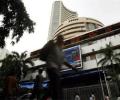
Broking firm Jefferies says Indian financial system is now flooded with the kind of liquidity witnessed in 2005-07 and 2009-10
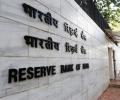
The central bank's next monetary policy review is scheduled for April 5. It had kept the policy rate unchanged in its February meeting on fears of inflation.

It is nearly after 13 years that a foreign brokerage has resumed holistic coverage on stocks of public sector banks (PSBs). To that extent, Morgan Stanley's report dated March 3, where the analysts have listed their order of preference for PSB stocks, is an indication that the state-owned banks may once again be attracting some interest, thanks to three back-to-back quarters of good results in FY21 so far. "State-owned banks' balance sheets have improved, and bad loans formation should moderate going forward," the analysts note and this is the key reason for them to relook at their stance on PSBs. While State Bank of India (SBI) remains their preferred pick, stocks of Bank of Baroda (BOB) and Punjab National Bank (PNB) have been upgraded from 'underweight' to 'equal-weight'. The brokerage maintains its underweight recommendation on Bank of India and Canara Bank.
With their home markets in turmoil, large global investors such as Blackstone, Carlyle, Morgan Stanley, JP Morgan and the Government of Singapore Investment Corporation are actively scouting for and signing deals in the Indian property sector.

India is world's one of the biggest e-commerce markets.
Let's take a look at some commodities and see how they are expected to perform in the next two years.
HSBC has cut Reliance Industries to 'underweight' from a 'neutral' rating.

Shares of Bajaj Finance surged over 6 per cent on Thursday after the diversified non-banking finance company reported an 18 per cent increase in consolidated net profit to Rs 4,308 crore for the December quarter. The stock rallied 6.33 per cent intraday to touch Rs 8,249.95 - a 52-week high -- on the BSE.
